Staying hard on camera is a head problem, not a hardware one
Every page that answers this question is selling a pill. The version from someone who does the job: what stalls a scene, what happens in the room when it does, what it costs when you're also carrying the day's expenses, and why nerves beat pharmacology every time.
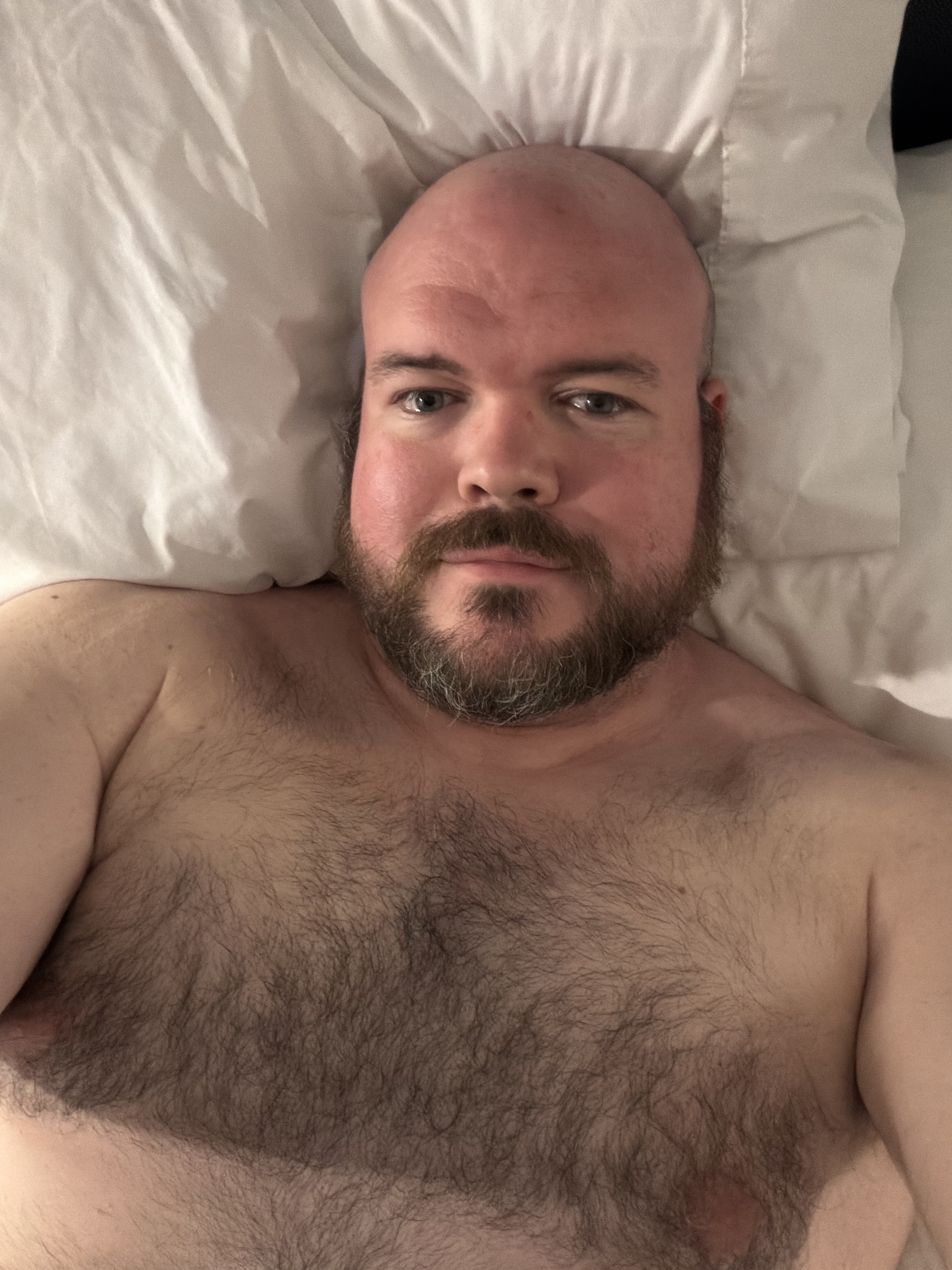
If your head is not in the game, your dick won't cooperate. That's the whole answer, and I'm putting it first because every other page that answers this question buries it under something they want to sell you. I've searched this myself. The results are erectile-dysfunction pharmacies, supplement brands, telehealth companies, and magazine pieces from 2016 quoting performers who worked in a studio system that barely exists anymore. Not one of them is written by somebody who was in the room that week.
I'm not selling you anything on this subject. I don't have a supplement line, I'm not an affiliate for a pill, and I'm not a doctor — nothing here is medical advice. I'm a guy who shoots and performs in his own scenes and has been doing it a little over a year. That's the seat I'm writing from.
Do male performers always get hard on set?
No. Not always, not reliably, not on command — and anyone telling you otherwise is either selling something or hasn't done it. It's happened to me, and every performer I've talked to about it says the same. It's one of the least discussed parts of the job and one a lot of guys carry real mental anguish about, because the work comes with an assumption attached.
The assumption is that men are ready all the time, permanently, with no downtime and no circumstances under which they wouldn't want it. That's the myth the whole category runs on. It's weird for a lot of people to hear that it isn't true, but it isn't, and every man reading this already knows it isn't.
What causes a scene to stall?
Almost always something in your head, not your body. Bad news that morning. An argument with a girlfriend. Somebody getting in your head right before you walk in. Being too tired. And the thing nobody expects: being too amped up — the lights, the setup, the whole apparatus of the day.
You're also being watched. You're being directed. You're being asked to hold a position or move in a way you'd never do with a partner, because there's a real difference between what feels good and what looks good on camera, and the second one is the job. That gap is bigger than people think, and it's a thing your body notices.
The person you're working with matters too, in both directions. Sometimes you don't know them well and there's nothing built yet. Sometimes you know them very well and that's its own kind of pressure. Neither is a problem exactly — they're just variables, and on any given day one of them can be the one that decides it.
What happens in the room when a male performer can't perform?
You talk. That's genuinely it, and it's far less dramatic than people imagine. You turn to your partner and you say some version of: it's nothing to do with you, I'm having some difficulty, give me a minute. Saying it out loud is most of the fix, because the alternative — white-knuckling it silently while everyone pretends not to notice — is what turns a ten-minute pause into a ruined day.
Depending on who you're working with, some will help. Some won't, and that's entirely their call. Either way it isn't their job. It's yours. Getting yourself there is the responsibility of the person it's happening to — whether that means stepping into the bathroom to compose yourself for a few minutes, or having a conversation with your own doctor at some point about whether medication is right for you. Everybody has their own methods for getting back in the zone. Mine mostly involve leaving the room and getting my head quiet.
The one thing you don't do is let it become a thing. I've written about tapping out mid-scene being a normal part of how scenes get made. This is the same principle pointed at a different problem.
What if it still doesn't work?
You shoot the softcore version. Move the camera angles, change what's in frame, and perform the motions without the penetration. It looks like what it's supposed to look like, and you still come away with a real product both people agreed to on the spot.
If that sounds like cheating, it's how most of the sex scenes you've watched in mainstream film were made. Very few Hollywood sex scenes involve anyone actually having sex. The industry that gets treated as the respectable one has been solving this with camera angles for decades — the only difference is nobody expects them to explain it afterwards.
What does it cost when the scene doesn't happen?
This is the part nobody writes, because writing it requires being the person carrying the day's costs and the person who has to perform in it.
You lose the scene, or you lose the scene you wanted — the one you thought would sell. You're out the time. You're out whatever you spent on the day: travel, location, wardrobe, any product bought specifically for that shoot. Your partner is out her time and whatever she spent getting there.
And you can lose goodwill, which is the expensive one. Depending entirely on how you handle it, it can cost you contacts. Some men do not handle this pressure professionally, and word moves fast in a small industry. Handled well — said out loud, dealt with calmly, scene adapted or rescheduled — it costs you a day. Handled badly, it costs you the next booking and the one after that.
That's the real difference between the two outcomes, and it has nothing to do with your body.
How many scenes can a male performer shoot in a day?
Two, if you want both of them to be good. That's my rule of thumb — two quality shoots, spread apart, where you finish.
A shoot runs thirty to forty-five minutes of actual scene, and by the end of a day you've done somewhere between an hour and ninety minutes of genuinely strenuous cardio. It takes a toll. After an Exxxotica weekend it's not unusual for me to be extremely sore and wrung out for a few days afterwards. It looks like fun and games from outside, and the fun part is real, but the work part is work.
You can physically do more. I've done four and five in a day. It's exhausting, it isn't sustainable, and I can't do it multiple days in a row. Some people can. The truth is that there's a broad range of normal here and the only number that matters is your own. Mine tells you nothing about yours. If five back to back works for you, do five. If you need the rest, take it. This is a marathon.
Do fluffers still exist?
Yes — just not usually as a dedicated person. On pro-am sets like mine, the fluffing is done by whoever you're working with: kissing, touching, oral, whatever gets you into the moment. Some of the women I've worked with are glad to help. Some tell me straight out that they're not into it, and that's a completely legitimate boundary you find out about beforehand, not in the moment.
On bigger professional productions the dedicated role does still exist — large-scale shoots especially, where a director is working against real time constraints and somebody's job is to get each guy ready fast. That's not my world; I shoot small, and I'm going on what performers who work those sets tell me. But the role hasn't vanished the way the "does that still exist" articles imply.
Either way, you can't build your day around it. Assume it's on you and treat anything else as a kindness.
Does it get less nerve-racking?
Not really. I've been doing this a year and change, so take that for what it's worth. Every shoot still has nerves in it. The ones that get me most are working with people far more experienced than I am — performers who've been doing this for years, who've seen everything, some of whose work I was a fan of before I ever met them. There's a genuine starstruck component to that, and being amped up in that specific way is not the same as being turned on.
I didn't expect this part and never thought I'd say it out loud: the nerves can make it hard to finish. Getting to the money shot, getting to the point where the scene ends, can be genuinely difficult when you're that wound up. It's difficult enough to get hard and keep the shots looking right. Closing it out is its own problem, and nobody warns you about that one either.
So what decides it?
Your head. Every time.
I'm not a doctor and this isn't medical advice — I'm telling you what the pharmacology can't fix, not what it can. But in my experience, if you're not turned on, it does not matter how much Cialis or Viagra you've got in your system. My head not being in the game has never been a problem a pill solved, which is inconvenient for roughly every page that outranks this one. The mental state you walk in with is the biggest single factor, and the practical work is nearly all upstream of the scene: sleep, what you walked in carrying, who you're working with, whether the day is built at a pace a human can sustain.
That's also why the answer to "how do they stay hard" is so much less interesting than people want it to be. There's no trick and no secret. It's mostly not turning up already wrecked, and being willing to say something out loud when it isn't working.
If you're a performer looking for the practical version of this — scheduling, prep, and what to have sorted before a multi-scene event — that's in the expo playbook. If you want the wider picture of what a shoot day involves, the twenty minutes you see covers the hours around the part that ends up on screen.
And if you came here from a page trying to sell you something for your own bedroom: I'm not that, and this isn't that. I'm describing a job. But the head-versus-hardware thing is the one part that translates, and you didn't need to buy anything to hear it.
— Sly