Yes, that's me typing. Why I answer every message myself, and how to tell when someone doesn't
A whole industry exists to type messages while wearing a creator's face. I don't use it: every reply from my accounts is me, sometimes slowly. How the chatter business works, the tells that give it away, and what that means for the money you spend.
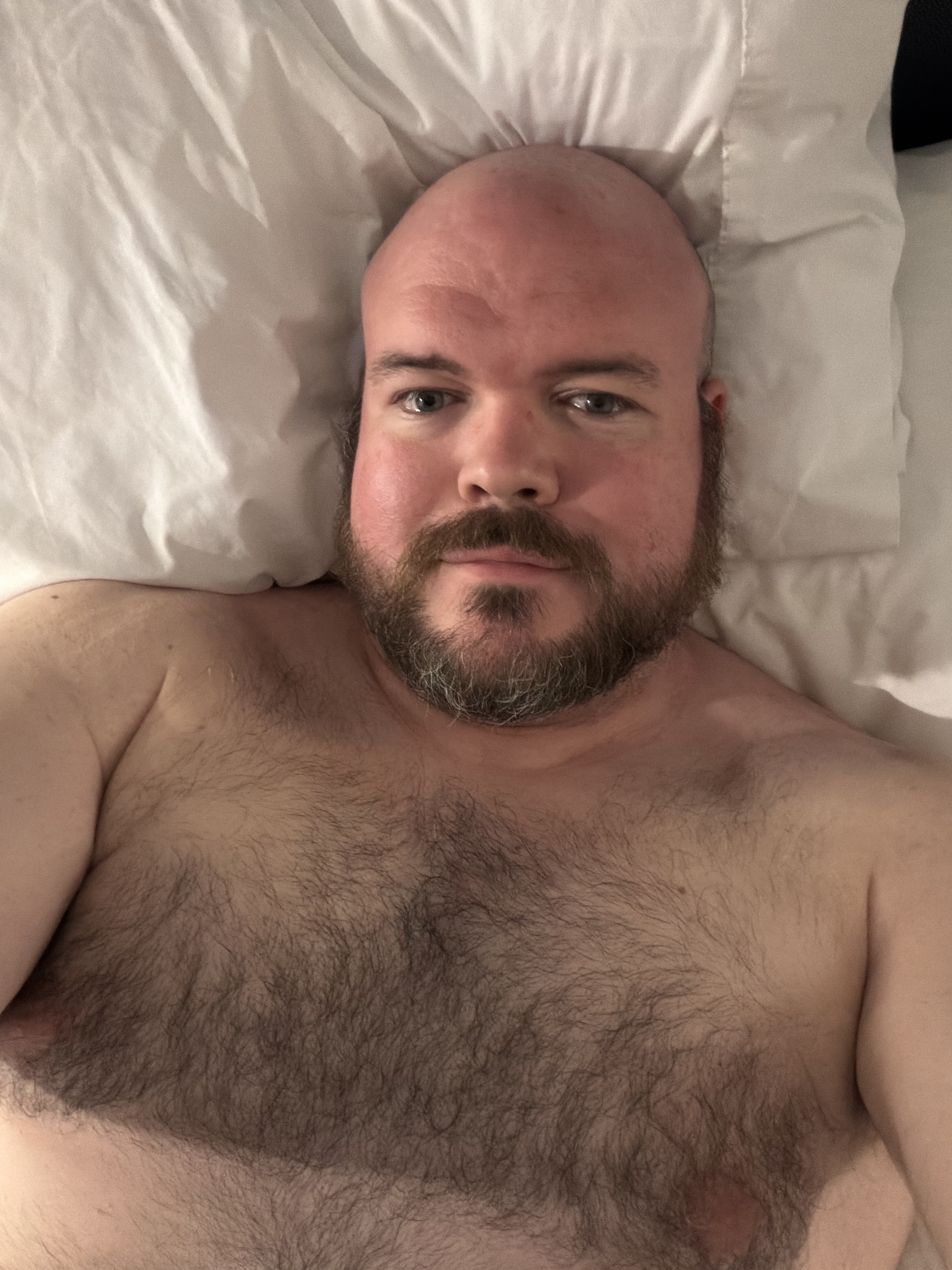
Every message that comes back from my accounts is typed by me. No agency, no chat team, no bot writing in my voice while I'm asleep. The cost of that's speed, and I want to be straight about it up front: I'm sometimes slow, occasionally days slow, because there is one of me and the inbox doesn't care about that.
I'm writing this because the question underneath it's one fans ask constantly and almost nobody in this industry answers straight. You are paying partly for access to a person. It's reasonable to want to know whether the person exists on the other end of the message, and the answer varies wildly by creator in a way that's deliberately hard to see from the outside.
Do creators read their own DMs?
Some do, many don't, and there is no way to tell from the profile. On the large subscription platforms, messaging is where a meaningful share of the money is made, which means messaging became a job, and once something is a job somebody will offer to do it for you.
That offer isn't a rumor or a scandal. It's an openly advertised service. Management agencies sell chat operations as a headline feature, recruit for the role publicly, and pitch creators on round- the-clock coverage across time zones. The whole proposition is that your inbox keeps earning while you sleep, which requires that somebody else is awake and typing as you.
I have seen the recruitment side of this from the creator's chair, because those agencies pitch performers too. I wrote up how I read those approaches in "We can get you to $10k a month", which is that same industry looking in the other direction.
What is a "chatter", exactly?
A chatter is a person paid to send and answer messages as the creator, usually on commission, usually one of several people covering the same account in shifts. Nothing about the interface tells you this is happening. You see her name, her photo, and a reply.
There's now a second version of the same thing, which is a language model doing the typing with a human supervising, or occasionally not supervising. And there is a third version at the edge, where the performer in the pictures doesn't exist at all and the whole account is generated. The distinctions matter less than the shared feature: the intimacy being sold is manufactured by someone other than the person you think you're talking to.
I'm not going to pretend this is universally sinister. A creator with an enormous audience genuinely can't answer everyone, and some disclose that they have help. The problem is that disclosure is rare, because the product being sold is specifically the feeling that it's her.
How can I tell if I'm talking to a real creator?
None of these is proof, but the pattern across several of them is worth trusting. Consider the shape of the conversation rather than any one message.
- Impossible availability. Instant replies at every hour, every day, no gaps ever. A one-person operation has a sleep schedule and a shoot day, and it shows in the response times.
- No memory of her own work. Ask something specific about a scene or a co-star and watch whether the answer engages with the actual thing or slides back to a script.
- The conversation only moves one direction. Every thread bends toward a purchase, and any answer you give gets routed back to the same ask.
- Tone that never varies and never declines. Real people have moods and boundaries. A creator who is never tired, never busy, and never says no to anything is a workflow, not a person.
- The voice changes between sessions. Different vocabulary, different rhythm, different level of interest across days is what shift coverage looks like from the outside.
The advice, then: assume nothing, and let the specifics do the work. Detail is expensive to fake at scale, which is why asking about the actual work is more informative than asking whether you're talking to a real person, a question every script has an answer for.
Why do I do it myself?
Because the alternative would make the thing I'm selling false, and because I'm not big enough to be pretending otherwise. I run this operation alone. I shoot, I edit, I write this site, and I answer the messages, which is the same reason I run my own site instead of renting my presence from somebody else's platform.
There's a business argument for outsourcing and I understand it. A chat team almost certainly earns more per subscriber than I do. But the trade is that you would be paying for a relationship with a contractor, and I would be spending my time defending a fiction instead of making scenes.
There's also a smaller reason. The messages are where the work comes from. Ideas, requests, the thing somebody wants to see that I wouldn't have thought of on my own. Handing that channel to a stranger optimizing for conversions means never hearing any of it. I wrote about the pipeline from a message to a finished scene in how a request becomes a scene.
What does that cost you as a fan?
Speed, and sometimes a lot of it. That's the trade, and I would sooner state it than have you discover it.
I get to messages when I get to them. A shoot day, an edit, or an event weekend can put me out of the inbox for a stretch, and there is no second person picking up the slack. If your standard is an instant reply at three in the morning, I'm the wrong account and the accounts that meet that standard are usually meeting it with staff.
What you get in exchange is that the reply is mine, that it reflects what I shoot and will do, and that a no is a real no rather than a script that hasn't found the right upsell yet.
How do I get an answer out of you, then?
Say the thing in one message. Specific, direct, no throat-clearing. The messages that get answered fastest are the ones that don't require me to run an interview to find out what is being asked.
What works: a clear question, a scene reference, a real request with enough detail to evaluate. What doesn't: escalating pressure, a demand for a reply time, or treating slowness as a personal insult. For anything on the custom side, how I handle the process is written up in the customs post, because settling it once beats renegotiating it in a thread.
And if you're ever unsure whether it's really me, ask me something only the person who was in the room would know. I would rather be tested than assumed.
Why I write my own replies
There's an entire service industry built to type messages while wearing a creator's face, it's normal, it's rarely disclosed, and you can't see it from the profile. I don't use it. Every reply from my accounts is me, which means it's really me, and it's sometimes late, and I would make that trade again.
If you want to see what the messages produce, the work is on my fan platforms, and my accounts across every platform are listed on the links page. The one on the other end is the same guy who wrote this.
— Sly